No. 004 · The Workshop
How the work is done.
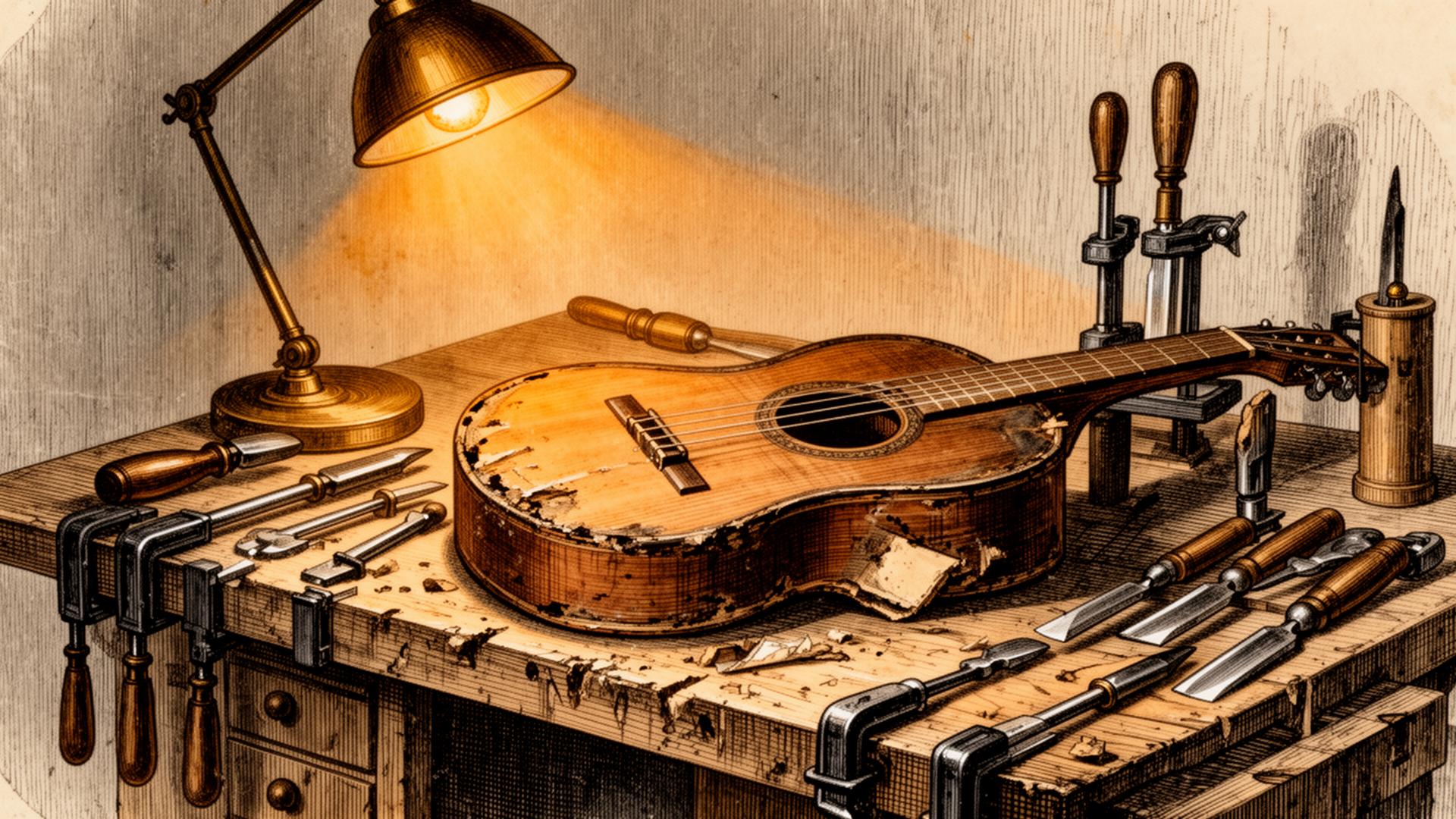
We borrow the language of the luthier on purpose. A legacy system deserves the same patience as an old instrument: diagnose before you cut, preserve the maker's voice, and write down what you changed so the next person can read the seams.
Step 01
Intake
We listen to the system before touching it. Telemetry shims, archetype detection, MMI baseline.
Step 02
Stabilize
Stop the bleeding. Name the silent failures. Make the broken parts loudly broken.
Step 03
Restore
Repair the spine without erasing the original hand. Preserve voice; replace only what no longer holds.
Step 04
Document
Publish the restoration log and a short white paper. The artifact is part of the deliverable.
Instrument
Modernization Maturity Index
A five-axis reading taken at intake, mid-restoration, and on completion. Reported in plain numbers, not adjectives.
- 01LegibilityCan a stranger read the system in an afternoon?
- 02ObservabilityDoes the system tell you when it's hurt?
- 03RecoverabilityCan it be brought back from a bad state?
- 04ModifiabilityCan a small change stay small?
- 05ProvenanceDo we know why each part exists?